I deleted Instagram from my phone for the fourth time last month. Not because I'm some anti-tech crusader — I genuinely like the app. But I noticed something disturbing: I was opening it without thinking. Not to see anything specific. Just… opening it. Like a lab rat hitting a lever.
Here's my controversial take: the problem isn't that we're addicted to our phones. It's that we've been trained to believe being constantly available is a virtue. We wear our responsiveness like a badge of honor. Reply in 30 seconds? You're a team player. Take four hours? You're "checked out." That's not productivity culture — that's a cage with a nice paint job.
I've found that the loudest voices preaching digital minimalism are often the same people who can't sit through a two-hour flight without buying Wi-Fi. So let's talk about what actually works — not the performative stuff.

The Attention Economy Is Rigged — And You're Not Paranoid Enough
Let me hit you with a number that should make you uncomfortable: the average person checks their phone 96 times a day. That's once every ten minutes of waking life. Cal Newport cites this in his work on digital minimalism, and honestly, it tracks with everything I've observed.
Here's what most people miss about this statistic. It's not a willpower problem. You're not weak. You're up against thousands of engineers whose entire job is to make their app stickier than the last one. Your prefrontal cortex — the part of your brain responsible for resisting temptation — is roughly the same hardware your ancestors had when the biggest distraction was a squirrel. It never stood a chance against infinite scroll.
The rise of digital minimalism isn't some trendy wellness fad. It's a rational response to an asymmetric war. On one side: you, a tired human with a to-do list. On the other: algorithmic feeds engineered by the best minds in behavioral psychology. You're bringing a butter knife to a drone strike.
And yet we keep framing this as a personal failing. "I'm so bad at putting my phone down." No — the game is rigged. Once you accept that, the solution changes completely.
The "Just Delete Everything" Advice Is Mostly Garbage
I'm going to say something that might get me uninvited from certain minimalist circles: deleting all your social media and buying a dumb phone is often a performative flex, not a solution.
Don't get me wrong — for some people, a hard reset is exactly right. If social media genuinely wrecks your mental health, cut the cord. But for a lot of us, the all-or-nothing approach backfires spectacularly. You go cold turkey for two weeks, feel smug, then fall off the wagon and binge like you just discovered the internet for the first time.
What actually works — and I've tested this on myself with embarrassingly scientific rigor — is intentional friction. Not elimination. Friction.
Here's my personal system:
- Move the app off your home screen. Not delete it — just bury it. The extra two seconds of searching is enough to break the autopilot reflex.
- Turn off every notification that isn't a human directly trying to reach you. Your favorite store's flash sale is not an emergency.
- Set a "phone parking spot" at home. Mine lives on a shelf by the door. Out of sight, out of hand.
- Schedule your scrolling. Sounds ridiculous, I know. But a 20-minute window for Instagram feels different than 20 scattered 30-second hits. The first is a choice. The second is a twitch.
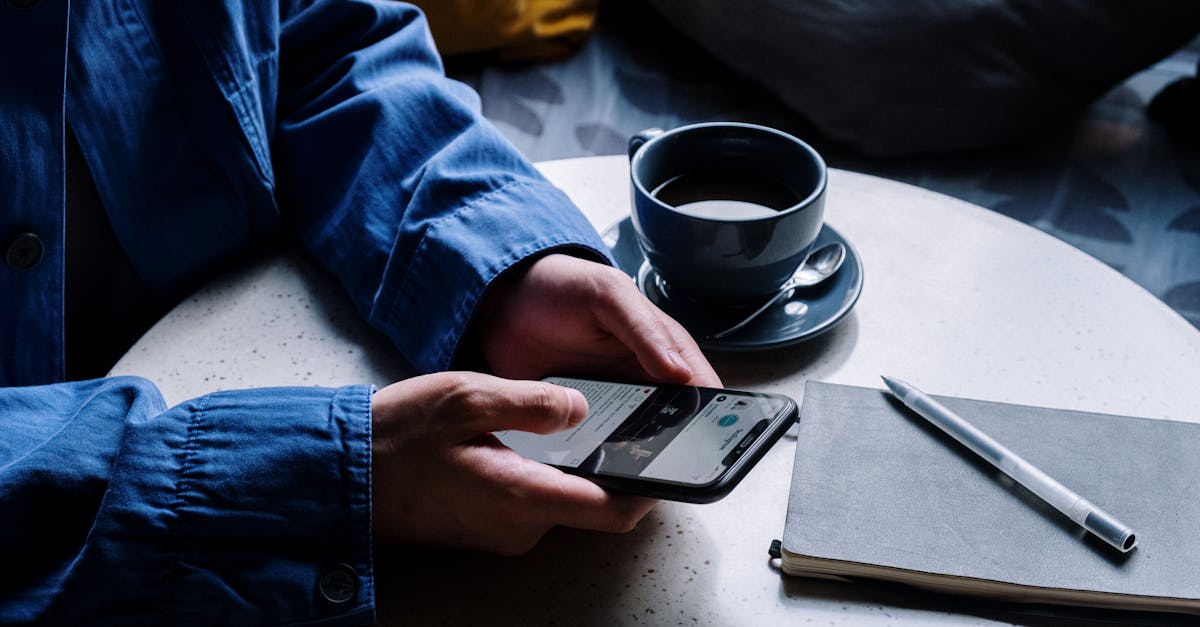
The goal isn't to become a monk. It's to make your phone a tool again instead of a reflex.
What I've Actually Gained From Digital Minimalism
I should be honest about the payoff, because "you'll feel less stressed" is the kind of vague promise that makes people roll their eyes.
Since I started treating my attention like a limited resource — because it is — a few concrete things shifted:
- I read books again. Actual ones. I finished eleven last year versus maybe two the year before.
- My mornings stopped feeling like a race I was already losing. I don't touch my phone for the first 45 minutes. The world doesn't collapse.
- I noticed how much of my "busyness" was just reaction. Half my old to-do list existed only because someone else's request landed in my inbox at 9 a.m.
Is this a miracle cure for modern life? No. I still open Instagram when I'm bored in line at the pharmacy. But the difference between "I choose to check my phone" and "my phone checks me" is everything. One feels like agency. The other feels like being a puppet with a very expensive string.
Let's be honest — the productivity gurus selling you $400 focus courses won't tell you this, but digital minimalism is mostly unsexy. It's boring. It's putting the phone in a drawer and feeling weird about it for a week. There's no aesthetic for that.
The Hidden Cost of Constant Availability
Here's the part that keeps me up at night. We've quietly accepted that being reachable at all times is the baseline expectation. A coworker pings you at 9 p.m. A group chat explodes during dinner. A "quick question" arrives on a Sunday.
I'm not arguing for digital hermit life. But I am arguing that the rise of digital minimalism is really a story about reclaiming boundaries in a world that treats boundaries as rude. That's the deeper war. The apps are just the battlefield.
Research keeps piling up showing that fragmented attention tanks our ability to do deep, meaningful work — and more importantly, to feel present in our own lives. You can't be a good friend, parent, partner, or even a good version of yourself if you're always half-somewhere-else, thumb hovering over a notification.

Your Move — And It's Smaller Than You Think
You don't need a digital detox retreat or a 30-day cleanse. That's the Instagram version of minimalism — optimized for the aesthetic, not the outcome.
Start embarrassingly small. Pick one moment today where you'd normally reach for your phone and just… don't. The elevator. The coffee line. The first ten minutes of the morning. Sit in the discomfort. Notice what your brain does when it's not being fed.
Because here's the truth nobody posts about: your attention is the only currency you actually own. Everything else — your time, your energy, your focus — flows from where you point it. And right now, an entire industry is spending billions to make sure you never point it at anything they don't control.
So the real question isn't whether you should try digital minimalism. It's whether you're okay with someone else deciding what deserves your focus. I know my answer. What's yours?